
Concrete Removal
How do you remove concrete from a backyard with no side access?
By CoreCut Demolition · Published September 28, 2026
- backyard access
- concrete removal
- load-out
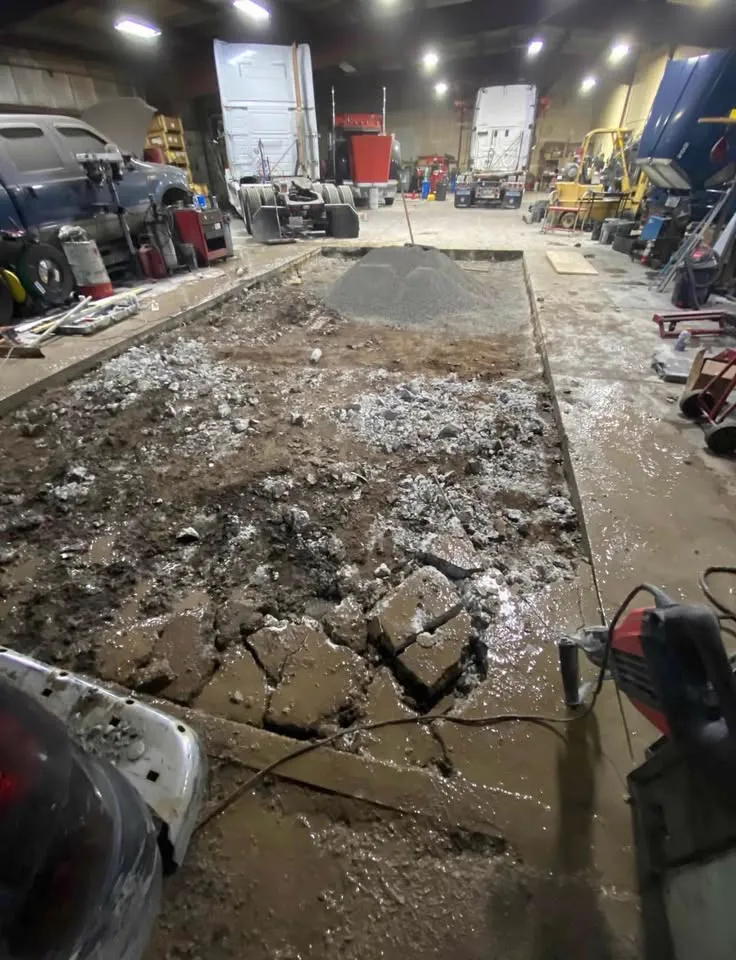
Concrete can be removed from a backyard without side access by breaking it into pieces sized for the available route, whether through a gate, past a temporarily removed fence panel or through the home over protected floors. The exit route determines what equipment can be used and how the pieces are handled.
On a Mississauga semi or townhouse, the first site walk follows the path from the slab to the loading point.
Map every possible route
A narrow gate may admit small equipment, while a shared side yard may require agreement with the neighbour. If the only direct path is through the house, measure openings and review floor finishes, stairs and turns. A route that accepts a wheelbarrow empty may not be suitable with concrete loaded into it.
The plan checks where people will enter and leave during the work. Keeping household access separate from debris handling makes a cramped site more manageable. Permission to use a shared space should be settled before equipment is booked.
Match the breaking method to access
Where a gate allows it and ground conditions suit it, compact equipment can assist with breaking and handling. Tight access may call for hand tools and wheelbarrows instead. The crew chooses the method based on the slab, nearby walls, buried services and the route out, not just the amount of concrete visible from the yard.
Concrete is divided into pieces that the route and handling team can safely manage. Cutting an edge first can protect a patio or foundation section that stays. The concrete removal service includes planning the load-out, not only the breakout.
A fence panel may change the plan
Temporarily removing and reinstating a fence section can create a useful path, but ownership and the neighbour's agreement must be clear first. The scope should say who removes it, how adjoining landscaping is protected and who reinstates it. A fence opening is not a licence to stage debris on someone else's property.
This route may allow different handling equipment than an interior path. It still needs ground protection and a clear place for the material to travel. If the neighbour does not agree, the project returns to the access options available entirely within the property.
When pieces travel through the home
Floor protection has to cover the complete route, including thresholds and changes in direction. The crew contains dust at the work area, uses closed handling containers where appropriate and avoids dragging sharp fragments across finished surfaces. Doors and walls along the route should be assessed before any load leaves the backyard.
Piece size is deliberately conservative when the path is indoors. The handling plan may require more trips, but the goal is to leave the rooms undamaged. The owner should know which spaces will be unavailable during load-out and where the crew will clean at the end of the day.
Find a legal loading point
A debris bin needs a suitable position that does not block the route or create a hazard. If there is no driveway space and the proposed bin would sit on the street, the owner should confirm the required approval with the City of Mississauga before placement. A bin cannot simply be assumed to fit at the curb.
Load-out often takes more effort than breaking the slab because every piece must travel the same constrained path. The driveway, walkway and patio removal scope should identify where concrete will be loaded and which remaining surfaces need protection.
What CoreCut does on a tight site
CoreCut Demolition Mississauga walks the full route, reviews the permissions and decides how to section and carry material without compromising the surfaces that remain. We identify where a bin can go, what protection is needed and what access must be available on the day. Send photos of the yard and exit route so the site visit can resolve the handling plan before removal starts.
Frequently asked questions
Can a wheelbarrow be used through the house?
It depends on clear widths, turns, floor capacity and the finishes along the route. A loaded barrow can be hard to control at thresholds or steps. The crew may choose smaller contained loads instead. The full path needs appropriate protection, and the owner should agree to interior access before demolition is planned around it.
Can the crew remove a neighbour's fence panel?
Only after the relevant owner agrees and the scope explains removal, protection and reinstatement. A shared boundary is not an automatic access route. If permission is unavailable, the team plans within the property's existing openings, which can change the equipment and piece size chosen for the work.
Where does the concrete go if a bin cannot fit on the driveway?
The team assesses another suitable loading area or a different hauling arrangement. If a street position is proposed, the owner should confirm City of Mississauga approval before a bin is placed there. The transport plan should be settled at the site walk rather than leaving loose debris in the yard while access is negotiated.
Why is access discussed before the breaking method?
A breaker can loosen concrete faster than it can be taken away through a narrow house or gate. If the exit route only accepts small pieces, the sectioning and equipment must follow that constraint. Starting with the route also exposes floor-protection, neighbour-permission and bin-location issues before they interrupt the work.
Primary planning references
Source links checked 6 October 2026. Confirm the requirements for your property and scope with the relevant authority and qualified professionals.