
Residential
Does Mississauga's private tree by-law affect concrete removal in my yard?
By CoreCut Demolition · Published September 28, 2026
- private trees
- concrete removal
- root protection
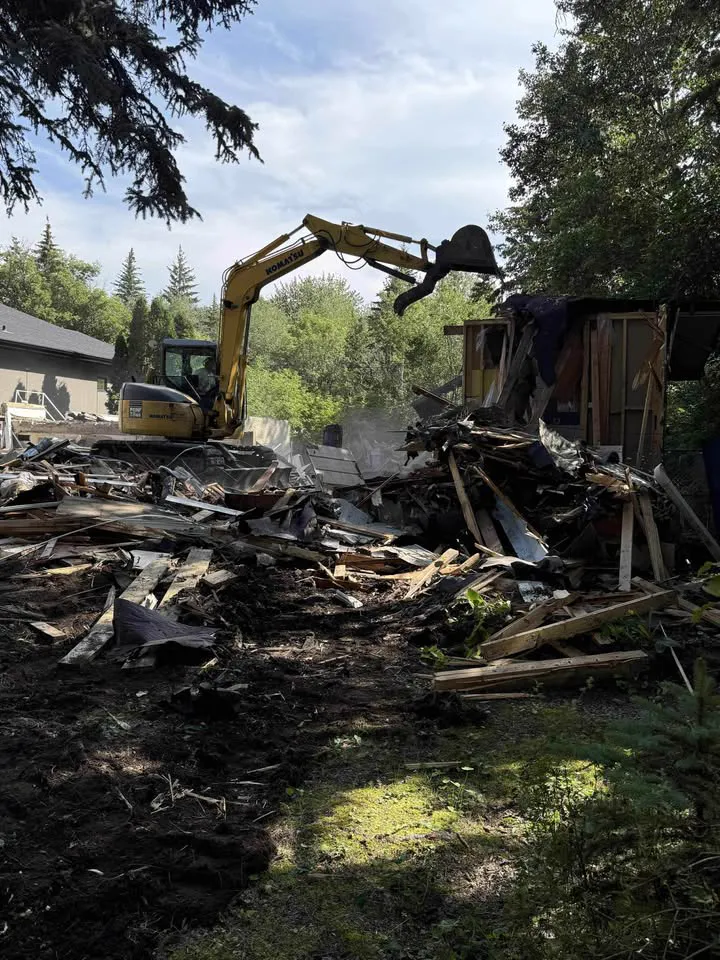
Yes, it can: Mississauga protects qualifying private trees under its Private Tree Protection By-law, and a permit may be needed to remove or injure a protected tree. Root damage caused by machinery or excavation near the trunk can count as injury even when the tree itself is left standing.
A concrete slab can appear separate from a tree while roots run under its edge. The removal plan has to account for what is under the paving, not just the space above it.
Where concrete and roots meet
A patio, driveway or pool deck may have been laid near a tree long before removal was considered. Roots can extend beneath the slab, follow its edge or grow into the granular base. Breaking concrete, lifting sections and scraping away the base can disturb them in different ways. A machine parked outside the cut area can compact soil that the tree also depends on.
Before planning driveway, walkway or patio removal, identify nearby trees and the proposed travel route. A sawcut can limit damage to paving that remains, but it does not automatically protect roots below. The replacement design also matters: deeper excavation after demolition may create the larger impact.
Understand the City's protection
Mississauga's Private Tree Protection By-law governs qualifying private trees. The City of Mississauga determines how it applies to the particular property and proposed work; do not infer an exemption from the type of concrete being removed. The owner should check the City's process before work that may injure a protected tree.
The question is not limited to whether the trunk will be cut. Excavation, root cutting and heavy equipment near the tree can matter. A tree outside the owner's intended replacement area may still be affected by access or loading. Keep the by-law review separate from utility locates, which answer a different question about buried services.
Set out the protection before equipment arrives
Protective fencing defines an area that workers and equipment should not cross or use for storage. Arrange a debris path and loading point outside the protected ground. Where concrete lies close to the trunk, the crew may need smaller sections or careful hand work rather than simply driving a breaker up to the tree.
The owner should establish the permitted work limits with an arborist when roots might be encountered. If roots appear beneath a slab, stop to review the approach instead of severing them to release concrete. Dust and debris also need to be kept out of the protected area. The goal is a practical removal sequence that does not trade an old patio for an injured tree.
When an arborist belongs on the team
An arborist can assess the tree, identify likely root sensitivity and advise the designer and contractor on protection and acceptable work methods. This input is especially useful when paving wraps around a trunk or the planned replacement changes the ground level. The City may require additional information for a permit review.
The removal crew can then adapt its sectioning and access to the approved plan. If the next contractor intends to excavate farther than the demolition crew, both scopes need the same tree information. A carefully removed slab will not prevent later root damage if the replacement excavation ignores the protected area.
How CoreCut plans work near a tree
CoreCut Demolition Mississauga reviews nearby trees, approved limits, protective fencing and the load-out route before site clearing or concrete removal. We adjust equipment access and section size where the plan calls for careful work, and pause if exposed roots or conditions differ from what was agreed.
Boulevard trees belong to the City and are a separate matter to confirm with the City of Mississauga. Request a site review with photos of the paving and trees, the replacement plan and any arborist or City direction already obtained.
Frequently asked questions
Can I remove a patio without cutting down the tree beside it?
Possibly, but leaving the trunk upright is not the only concern. Roots may be beneath the patio or its base, and equipment can compact the surrounding ground. Check whether the tree is protected, plan fencing and ask an arborist for guidance where work approaches roots. The contractor should stop if unexpected roots are exposed.
Does the City's by-law apply to root damage?
Injury to a protected tree can include damaging its roots, not only cutting branches or the trunk. The owner should confirm the proposed work with the City of Mississauga where a qualifying private tree could be affected. An arborist can help translate the intended cutting, lifting and excavation into a suitable protection plan.
Will a sawcut beside the tree protect its roots?
It defines an edge in the concrete, but roots may still run under that line or the material below it. The depth of the cut, subsequent breakout and base removal all need review. An approved work plan may call for different sectioning, limited excavation or careful hand work near the tree.
Is a tree on the boulevard treated like my private tree?
No. Boulevard trees are a City matter and should be checked separately with the City of Mississauga before adjacent work. Do not assume that a private-property tree review covers the boulevard or that a driveway edge gives permission to disturb City-owned planting. The route for equipment and debris may also need changing.
Primary planning references
Source links checked 6 October 2026. Confirm the requirements for your property and scope with the relevant authority and qualified professionals.