
Concrete Removal
Removing a Concrete Slab Without Wrecking What Is Around It
- concrete removal
- slabs
- protection
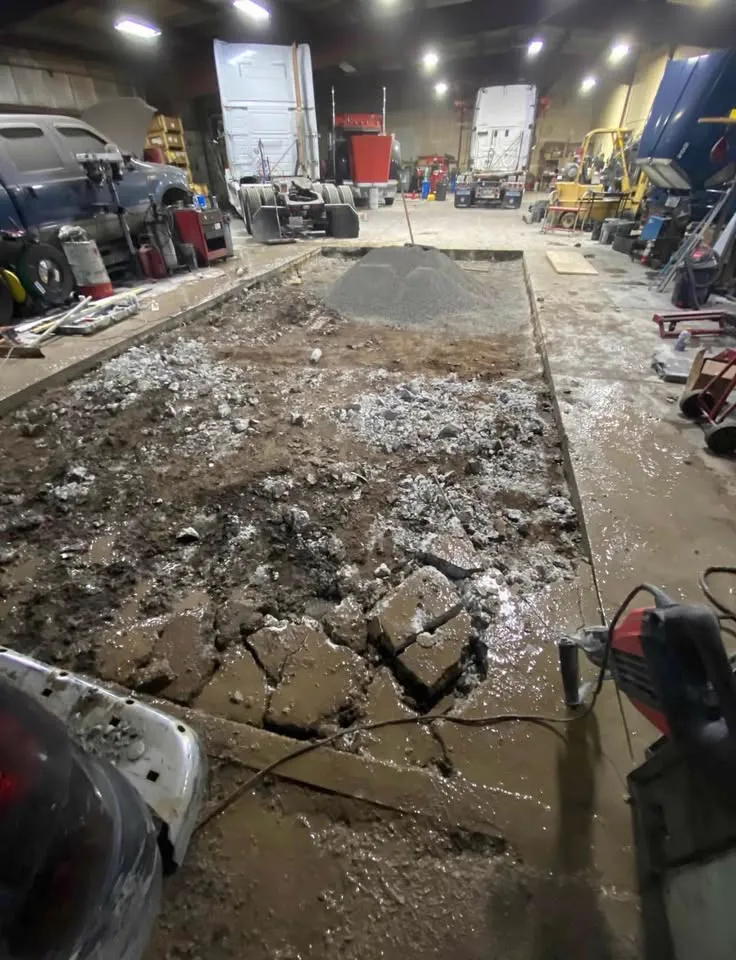
Taking out a concrete slab isn't hard. Taking it out without cracking the floor next to it, busting a pipe underneath or scraping up the hallway on the way out? That's the part that takes planning.
Whether it's a trench in a basement floor or a strip of shop slab, here's how a slab comes out cleanly and leaves everything around it in one piece.
Start by finding what's underneath
Before any tool touches the concrete, you want to know what's in or under it. In homes that means plumbing drains, water lines, radiant heat tubing and sometimes electrical conduit. In commercial units it can include trench drains, floor boxes and utility lines. Drawings help, and so does looking at where fixtures and drains sit above.
Knowing this decides how deep to cut and where to go gently.
Cut the edges first
The single most useful step is saw-cutting the boundary. A clean cut along the edge gives the break somewhere to stop. Without it, cracks can travel into the slab you meant to keep. With it, the remaining floor has a straight edge that's easy to patch or pour against.
Break or lift in manageable pieces
Once the edges are cut, the slab is either broken out or cut into blocks. Blocks are cleaner and quieter. Breaking is faster when the whole area is going. Either way, pieces are kept small enough to move through normal doorways when there's no big access route.
Protect the path out
The route from the slab to the truck gets as much attention as the slab itself:
- Floor protection on every surface the debris crosses
- Corner guards on door frames and stair edges
- Carts or boards instead of dragging pieces
- Loading straight into a vehicle or bin, not onto the lawn
- A clean-up of the route when the job is done
Deal with the dust and noise
Water keeps silica dust down during cutting and breaking, and HEPA vacuums handle clean-up. For noise, loud work is kept within the City's allowed hours, and neighbours appreciate a heads-up. Broken concrete is kept separate from other waste so it can go to an aggregate recycler where that option exists.
Leaving the area ready for what comes next
Removal isn't finished when the last chunk leaves. The base underneath usually has loose gravel, dust and broken edges that need clearing. Exposed pipes get checked, since that's the moment to spot any damage from years under the slab. Saw-cut edges are left clean so a plumber, a footing crew or a concrete finisher can pick up straight away. A quick walk-through with you at the end confirms what was removed, what stayed and that the route out is back to how it was.
When it makes sense to bring in a professional
A small patio slab in an open yard might be manageable with a rented breaker. Anything indoors, next to finishes, over services or in a commercial unit is where a crew with saws, breakers and a haul-away plan saves you money and headaches. That's day-to-day work for our concrete removal crew, and it often ties into interior demolition when the rest of the space is being opened up too.
The bottom line
A clean slab removal comes down to four things: know what's under it, cut the edges, move it out in sensible pieces and protect the route. CoreCut Demolition Mississauga removes slabs, trenches and pads without leaving damage behind. Request a free estimate and we'll look at yours.
Frequently asked questions
Can you remove just part of a basement floor?
Yes. The section is saw-cut at the edges first, so the rest of the floor stays intact for patching.
What if there's a pipe under the slab?
We work gently around known services and adjust tools and depth near them.
How is the broken concrete removed from a basement?
In pieces small enough to carry or cart through doors and up stairs, along a protected route.
Can the removed area be poured again later?
Yes. A saw-cut edge gives a clean joint for new concrete to be poured against.
Will removal crack my walls?
Saw-cutting first and using controlled breaking keeps vibration down and reduces that risk.