
Concrete Cutting
How are slurry and dust controlled when cutting concrete indoors?
By CoreCut Demolition · Revised 6 October 2026
- silica
- dust control
- indoor cutting
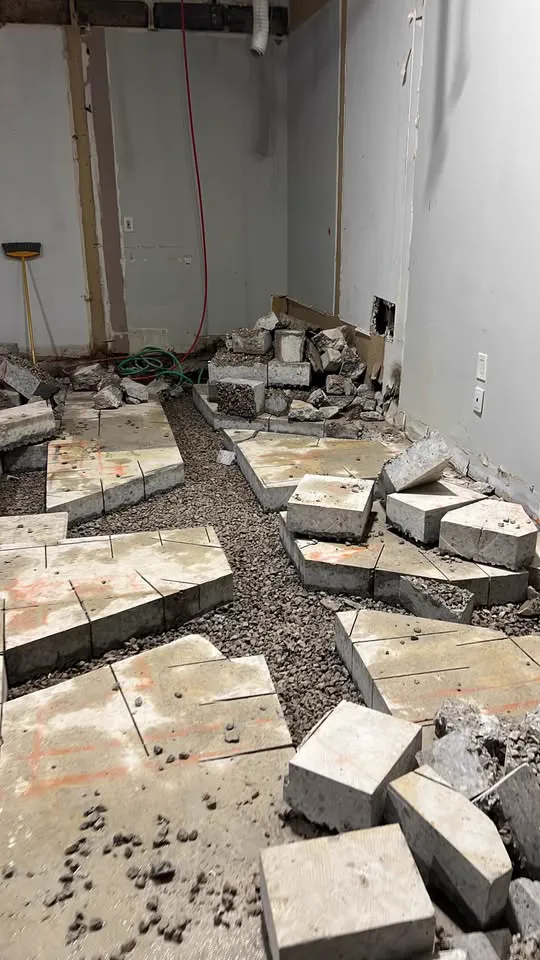
Dust is controlled mainly by cutting wet, so the water captures silica before it reaches the air, and slurry is controlled by containing, collecting and removing that water instead of letting it spread. Containment barriers, floor protection and HEPA vacuums handle whatever the water misses.
Getting this right protects the people doing the work, the people living in the building and the finishes around the cut. Here is how each part of it works.
Why concrete dust is taken seriously
Concrete contains crystalline silica. When it is cut, drilled or ground, very fine particles are released that can be breathed deep into the lungs. Ontario's Ministry of Labour treats silica as a designated substance, and its guidance for construction projects sets out control methods based on the task, such as using water at the point of cutting and appropriate respirators.
Indoors the risk is higher than outside, because the dust has nowhere to go. It settles on every surface and can drift through open doorways and ductwork into the rest of the house.
Wet cutting is the first line of control
Walk-behind floor saws, wall saws and core drills all run water to the blade or bit. The water cools the diamond segments and binds the dust into a grey slurry at the cut. Handheld saws can also be fitted with water feeds. Done properly, wet cutting prevents most of the dust from ever becoming airborne.
Containing and collecting the slurry
The trade-off with wet cutting is water. Slurry is heavy, gritty and will stain or damage flooring, carpet and drywall. It also should not be washed down floor drains or sinks, since it can settle in pipes and sewer use rules in Peel Region restrict what goes into the system. Typical controls include:
- Plastic sheeting and absorbent barriers around the work area
- Dams or berms at the edges of the cut to hold water in place
- Wet vacuums that pick up slurry as the cut advances
- Settling slurry in containers so solids can be disposed of properly
- Covering walls and finishes next to the cut to catch spray
Controlling what the water misses
Some tasks still create dust, such as breaking out cut blocks, chipping edges or cleaning up once the concrete dries. For those, the work area is sealed with plastic sheeting and zipper doors, HVAC vents in the area are covered or the system is turned off, and HEPA-filtered vacuums are used for clean-up. Dry sweeping is avoided because it simply puts fine dust back into the air.
Where the space is occupied, keeping people out of the work zone and planning the route materials take out of the building are just as important as the tools themselves.
Protecting the rest of the building
Floor protection runs from the entrance to the work area. Cut blocks are lifted onto carts or boards rather than dragged. Doors to rooms not being worked on stay closed. After the cut, surfaces around it are wiped and vacuumed so the area is clean enough for the next trade.
What we do about it
On our indoor jobs in Mississauga, CoreCut Demolition Mississauga cuts wet, collects the slurry as we go, seals off the work area and vacuums with HEPA equipment instead of sweeping. You can see a slab cut into a grid and lifted out in blocks on our concrete cutting page, and the same containment applies to interior demolition jobs where concrete is only part of the work.
If you need concrete cut inside a home or unit, ask for a free estimate and we will explain how we will set up the space.
Frequently asked questions
Is dry cutting concrete indoors ever acceptable?
It is strongly discouraged. Dry cutting releases fine silica dust into the air, and indoor spaces trap it. Wet cutting or tools with proper dust extraction are the normal standard.
Can the slurry go down my floor drain?
No. Slurry can settle in pipes, and sewer use rules restrict what can be discharged. It should be collected and disposed of properly.
Will my HVAC spread the dust?
It can. Vents in the work area are covered or the system is shut off during cutting and clean-up.
Do I need to leave the house during cutting?
That depends on the assessed work, separation and ventilation plan. Discuss occupancy with the responsible contractor before work. A dust barrier alone does not establish that adjacent rooms are safe to occupy.
Primary planning references
Source links checked 6 October 2026. Confirm the requirements for your property and scope with the relevant authority and qualified professionals.