
Concrete Cutting
Slurry, Dust and Water: What Happens When Concrete Gets Cut Indoors
- dust control
- silica
- indoor work
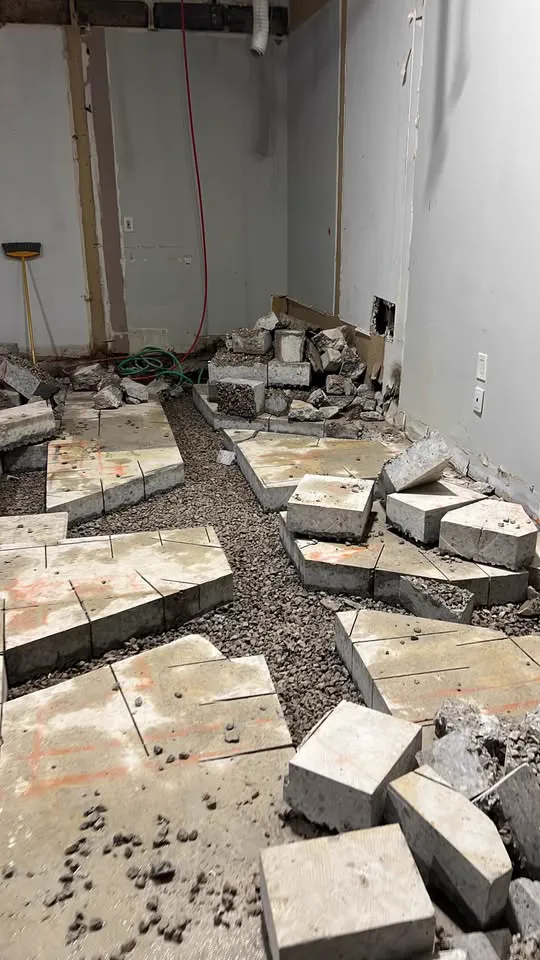
Cutting concrete inside a house makes people nervous, and fair enough. You picture grey dust on every surface and water pooling on the floor. Done badly, that's exactly what happens.
Done properly, though, it's surprisingly contained. Here's what's actually going on when concrete gets cut indoors, and what separates a clean job from a messy one.
Why water is involved at all
Concrete contains crystalline silica, and cutting it releases very fine dust you don't want to breathe. Ontario treats silica as a designated substance. The simplest and most effective control is water at the blade: it cools the diamond and binds the dust before it ever gets airborne.
So when you see a saw running with water, that's not a messy choice, it's the safe one.
What slurry is and why it matters
Mix concrete dust with water and you get slurry, a grey paste that's gritty, heavy and hard on floors. It'll stain grout, soak into carpet and dry into a crust on anything it touches. It also shouldn't go down drains, since it settles in pipes and sewer rules restrict it.
Managing slurry is where the real skill shows, and it's the part most worth asking about before anyone starts.
How a good crew keeps it contained
The set-up usually includes a few layers:
- Floor protection from the door all the way to the cut
- Plastic walls and zipper doors sealing off the work area
- Dams or absorbent barriers around the cut to hold water
- Wet vacuums pulling slurry up as the cut moves along
- Containers to settle the slurry before disposal
- Covered vents or HVAC turned off in the area
Dust still happens, just less
Even with wet cutting, some tasks raise dust: breaking out cut pieces, trimming edges or cleaning up once things dry. That's why HEPA vacuums are used instead of brooms, since sweeping just puts fine dust back in the air. The plastic enclosure keeps whatever's left from drifting to the rest of the house.
Protecting the finishes that stay
Tile, hardwood and drywall next to a cut get covered and taped. Blocks are lifted onto boards or carts instead of dragged. After the cut, surfaces nearby are wiped and vacuumed. If you've ever seen blue protective film on a floor right up to a wall that's being opened, that's the same idea.
Questions to ask before the saw starts
You don't need to be an expert to tell whether a crew has thought about slurry and dust. Ask a few simple questions before the job starts and listen for specific answers rather than general reassurance:
- Will you cut wet, and how will you collect the water?
- How will you seal off the work area from the rest of the house?
- What will you do about the furnace and vents?
- Where does the slurry go when you're done?
- Do you clean up with HEPA vacuums or brooms?
When it makes sense to bring in a professional
Dry-cutting concrete indoors with a grinder is one of the worst DIY choices you can make for your lungs and your house. Anything bigger than a tiny patch belongs to a crew with wet saws, containment and HEPA gear. You'll see that approach across our concrete cutting and selective demolition work.
The bottom line
Indoor cutting is wet on purpose, and the slurry that creates is manageable with the right set-up. Ask any contractor how they'll contain it before they start. At CoreCut Demolition Mississauga, we'll walk you through our set-up at the site visit. Request a free estimate to see how it'd work in your space.
Frequently asked questions
Will concrete dust get into my furnace?
It can if vents are open. Vents in the work area should be covered or the system turned off during cutting.
How long does slurry take to clean up?
When it's vacuumed up as the cut goes, clean-up at the end is quick. Slurry left to dry takes much longer to remove.
Is concrete dust dangerous?
Yes, over time. It contains crystalline silica, which is why wet methods and proper controls are used.
Can pets stay in the house?
Keep them well away from the work area. Many owners keep pets in a closed room or out of the house on cutting days.
Primary planning references
Source links checked 6 October 2026. Confirm the requirements for your property and scope with the relevant authority and qualified professionals.