
Concrete Cutting
Wall Sawing for New Doors and Windows in Block and Poured Walls
- wall sawing
- windows
- doors
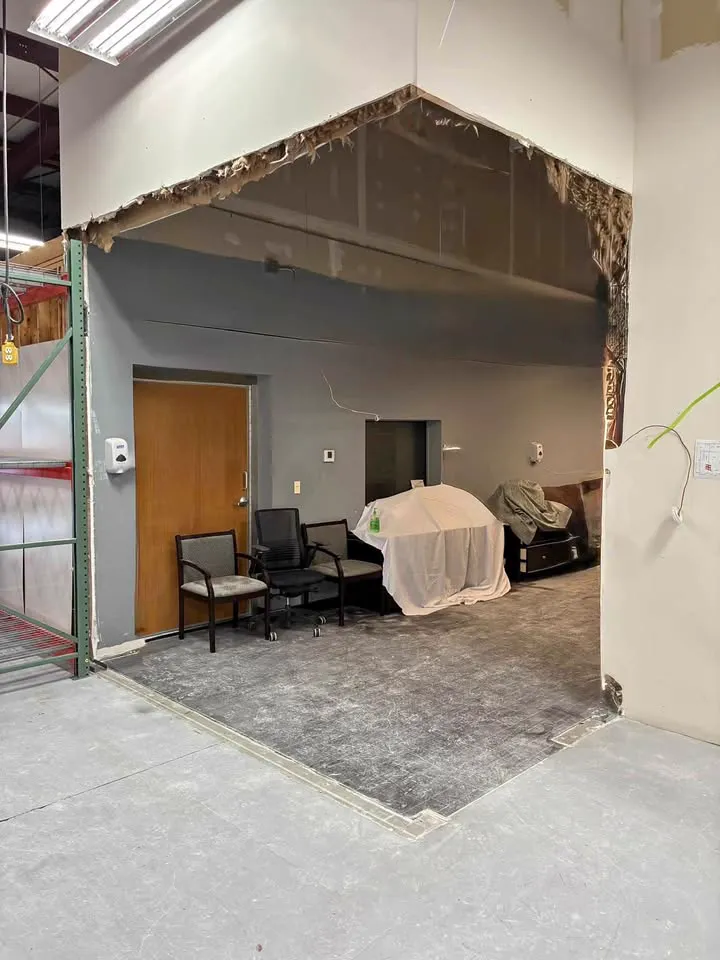
Adding a door or window to a concrete or block wall used to mean a lot of hammering. These days, the tidy way to do it is wall sawing: a track-mounted diamond saw that cuts straight through and leaves an opening you could practically fit the frame into straight away.
Here's how wall sawing works, and what changes depending on whether the wall is poured concrete or block.
What a wall saw is
A wall saw is a motor and large diamond blade that ride on a track bolted to the wall. The operator sets the track along the line and the saw makes pass after pass, going a bit deeper each time, until it cuts right through. Water runs to the blade the whole time to cool it and keep dust down.
Because the saw follows a fixed track, the cut is straight and consistent from top to bottom.
Poured concrete walls
Poured walls are solid and often reinforced. The saw cuts concrete and rebar together. Once the outline is cut, the section is divided into blocks that can be lifted out safely, since a single full-height piece can weigh far more than a crew can handle. The edges come out smooth and square, ready for a lintel and a buck or frame.
Block walls
Concrete block walls have hollow cores, some of which may be filled with grout and rebar. That changes the design more than the cutting. The engineer may call for filling cores beside the opening or adding a bond beam. The saw still gives clean edges, but the exposed cores need to be filled or capped as part of the finishing.
Why sawing beats hammering here
For a door or window, a clean cut pays off in a few ways:
- The opening matches the drawings, so the frame fits
- Square edges give the lintel a proper bearing surface
- Less vibration means less cracking in the wall that stays
- Wet cutting keeps silica dust down
- Solid blocks are easier to carry out than rubble
Permits and support
New or enlarged openings in a foundation or exterior wall are structural changes, so in Mississauga you'll usually need a building permit with a lintel design. Temporary support may be needed during the cut. That part isn't optional, and a good contractor will ask to see the approved drawings before setting up.
What the finished opening looks like
When the last block comes out, you're left with four flat faces and square corners. The corners are usually finished with a core or handheld saw so the main cuts don't run past them, which keeps the wall around the opening from being weakened by overcuts. The opening is washed down, slurry is vacuumed up and the space is ready for the lintel, a pressure-treated buck or a steel frame. Compared with a broken-out opening, there's far less patching and parging to do before the door or window can go in.
It's also easier to check. The inspector and the installer can both measure the opening against the drawings and see straight away that it matches.
When it makes sense to bring in a professional
Wall saws aren't a weekend rental for most people. They're heavy, need water and power, and cutting a load-bearing wall wrong can have serious consequences. For anything like this, bring in a crew that does concrete cutting regularly and can coordinate with any structural work happening inside.
The bottom line
Whether your wall is poured or block, wall sawing gives you a clean, accurate opening with less damage around it. CoreCut Demolition Mississauga cuts door, window and walkout openings to the approved plan and hauls the concrete away. Get a free estimate if you're adding an opening.
Frequently asked questions
Can you enlarge an existing window opening?
Yes. Wall sawing is often used to make a basement window larger for egress, with a new lintel as designed.
Does the wall saw leave marks on the wall?
The track is bolted on temporarily. The small anchor holes are usually inside the opening or easily patched.
Is block easier to cut than poured concrete?
The cutting is similar, but block walls need extra attention to the hollow cores around the opening.
How is the cut section removed?
It's cut into smaller blocks and lifted out by hand or with lifting equipment, then taken for recycling where available.
Primary planning references
Source links checked 6 October 2026. Confirm the requirements for your property and scope with the relevant authority and qualified professionals.