
Concrete Cutting
What Core Drilling Is For, and When It Beats a Sledgehammer
- core drilling
- plumbing
- concrete cutting
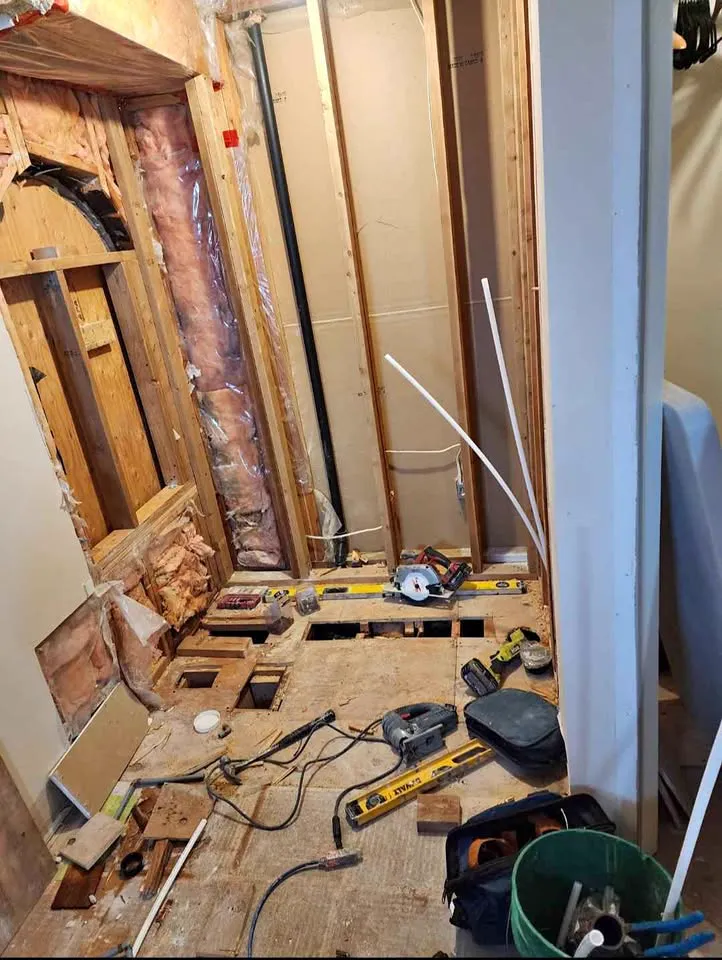
Need a hole through a concrete wall or floor for a pipe, a vent or a cable? You could chip one out with a hammer and a lot of patience. Or you could core it, and end up with a perfectly round, clean-sided hole in a fraction of the mess.
Core drilling doesn't get much attention, but it's one of the most useful tools in concrete work. Here's what it's for and when it's the obvious choice.
What a core drill is
A core drill is a hollow steel barrel with diamond segments around the rim. It's mounted on a stand bolted or vacuum-fixed to the concrete, or held by hand for small sizes. Water runs through the barrel to cool the bit and flush out cuttings. As it turns, it cuts a ring, and the solid cylinder in the middle, the core, comes out whole.
Common reasons to core
Most coring on residential and commercial jobs falls into a few categories:
- Plumbing drains and supply lines through slabs and walls
- Dryer vents, exhaust fans and furnace venting
- Electrical conduit and data cabling
- Sump pump discharge lines through foundation walls
- Anchor holes for railings and equipment
- Corner holes for a larger saw-cut opening
Why it beats a sledgehammer
A hammer punches through by shattering the concrete. The hole ends up bigger than you need, with ragged edges that are hard to seal, and the impact can crack the surrounding wall or floor. In a foundation wall, that's a leak waiting to happen.
A core, on the other hand, is sized to the pipe. The sides are smooth, so a sleeve or sealant fits properly. There's very little vibration and, because it's wet, much less silica dust in the air.
What to check before drilling
The biggest risk with coring isn't the drill, it's what's inside the concrete. Basement floors can have plumbing and radiant tubing under them. Walls can hide conduit. Suspended floors in condos and offices may have rebar or post-tensioned tendons that can't be cut. For anything beyond a basement slab-on-grade, scanning and an engineer's approval are normal, and condo corporations usually require them.
It's also worth planning for the water. Coring makes slurry, and it needs to be collected rather than left to run across a floor or down a drain.
Coring as part of a bigger opening
Coring isn't only for round holes. When a square opening is needed in a thick slab or wall, cores are often drilled at the corners so the saw cuts meet cleanly without overcutting past the corner. It's a small step that makes the finished opening look much tidier.
Sealing the hole afterwards
A core is only half the job. Once the pipe, vent or conduit is through, the gap around it has to be sealed, especially below grade where groundwater presses on the wall. That usually means a sleeve, a link-seal style rubber gasket or a hydraulic cement and membrane patch, depending on the size and location. A clean, round core makes that seal far more reliable than a chipped hole ever could, which is one of the quiet reasons coring is worth doing properly.
When it makes sense to bring in a professional
Small handheld cores through a block wall can be DIY territory if you're confident about what's behind it. Anything through a foundation, a suspended slab or near services is a job for someone with the right rig, scanning experience and a plan for the slurry. It's also worth knowing when coring will lead into bigger work like a structural opening or a full concrete cutting job.
The bottom line
If you need a hole through concrete for anything that'll be sealed, sleeved or seen, core it. It's cleaner, safer for the structure and easier to finish. CoreCut Demolition Mississauga can check what's in the concrete, drill the hole and leave it ready for your plumber or electrician. Book a free estimate if you've got a hole to make.
Frequently asked questions
How big can a core hole be?
Core bits come in a wide range of sizes, from small holes for cables to large ones for drains and ducts. Very large openings are usually cut with saws instead.
Does core drilling need an engineer?
Not usually for a basement slab-on-grade. Suspended, post-tensioned or heavily reinforced slabs typically need scanning and an engineer's approval.
Is coring messy?
It makes slurry rather than dust. With collection in place, the mess stays small.
Can you core through a foundation wall below grade?
Yes. The hole is then sleeved and sealed so water can't get in around the pipe.
Primary planning references
Source links checked 6 October 2026. Confirm the requirements for your property and scope with the relevant authority and qualified professionals.