
Residential
Do I need a permit to remove a deck or fence in Mississauga?
By CoreCut Demolition · Published September 28, 2026
- deck removal
- fence removal
- City permits
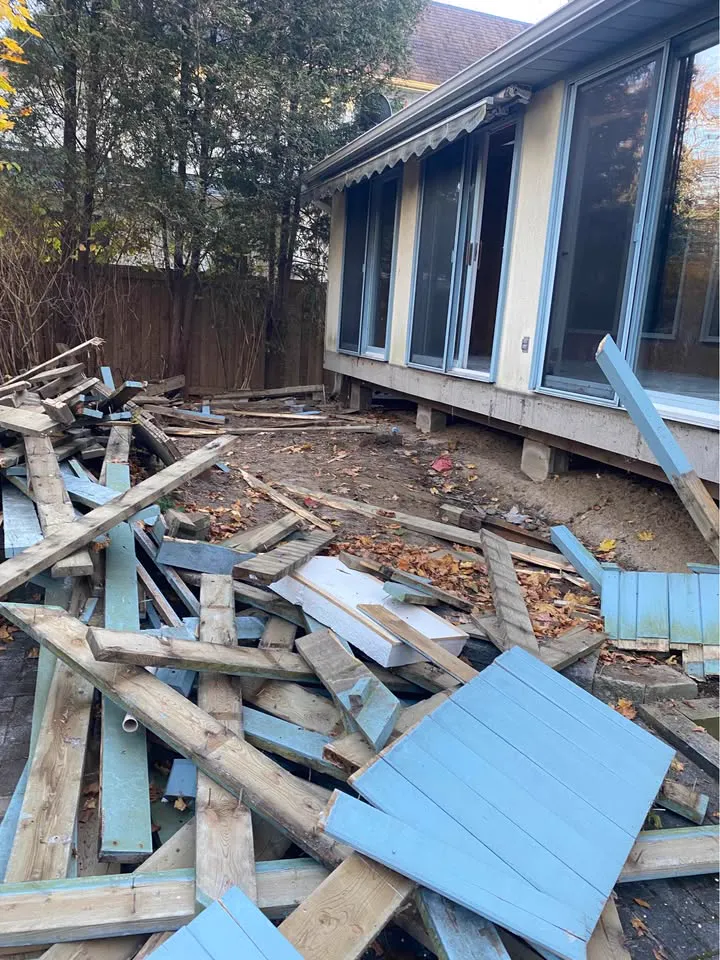
An ordinary fence removal generally does not need a demolition permit, while a deck depends on its size, attachment to the house and the scope of work. Check with the City of Mississauga Building Division about the particular deck before booking its removal.
A permit question is only part of the plan. Shared boundaries, pool enclosures and the condition left at the house wall can matter more to a homeowner than the act of taking down boards.
Why a deck is different from a fence
A deck may have been built as an attached structure with a ledger, foundations and stairs. A deck that needed a building permit to build may need City review before it is removed; do not assume every raised platform is treated like loose garden furniture. The owner should explain what is being taken out and whether a replacement is planned when asking the City.
A fence generally serves as a boundary rather than an attached part of the building. Even when its removal does not need a demolition permit, ownership and replacement responsibilities still need attention. A fence on a shared line can be a neighbour's concern as well as the owner's. Confirm the boundary and talk to the adjoining owner before dismantling a shared section.
A pool fence needs its own check
A fence serving an existing pool enclosure must remain compliant while the pool exists, so do not remove it without first resolving the enclosure requirements with the City. This is separate from whether a standard fence removal needs a demolition permit. If pool work is also planned, coordinate the enclosure and removal sequence instead of creating an unsafe opening.
Temporary access for debris can tempt a crew to lift out a fence panel early. Establish which panels can be touched, who can approve their removal and when protection must be restored. The agreed route should also avoid using the neighbour's yard without permission, even when it is the shortest path for old deck boards or posts.
What leaves with the deck
The deck surface, framing, stairs and guard components are the visible portion. Posts may sit on buried footings, and the ledger may be fixed to the house wall behind finishes. Agree whether footings are removed and how deep the remaining site is to be cleared for the next use.
Removing a ledger can expose fasteners, cladding and waterproofing details at the house. The owner should assign the appropriate trade to restore the wall; pulling off the deck does not by itself leave a weather-tight exterior. If stairs provided a regularly used entrance, arrange a safe alternate route before they come out. A deck and fence removal scope should name these edges explicitly.
Sort debris and leave a usable site
Wood, metal hardware and concrete footings may need different handling. The Region of Peel rubble and waste guide explains why concrete should not simply be mixed with all other debris. The junk and debris removal service can be planned alongside dismantling when the site contains leftover materials outside the structure itself.
Where posts are removed, agree whether holes are filled and by whom. Exposed fasteners, loose boards and an open edge at a porch or entry need attention before the property is handed back. The owner should confirm what remains for a new deck or fence contractor rather than assuming every buried element is automatically removed.
How CoreCut defines the scope
CoreCut Demolition Mississauga reviews the City question, boundary and access before removing a deck or fence. We clarify whether stairs, ledger, posts and footings are included, and identify the house-wall repair as a separate responsibility. For a shared fence, the owner should settle permission before work is scheduled.
Bring photographs and any drawings for the structure to a site review. That gives the crew a clear removal line and lets the owner arrange the safe entrance, pool enclosure or wall restoration that may still be needed after the debris leaves.
Frequently asked questions
Does every deck removal need a City permit?
No blanket answer covers every deck. Attachment to the house, the existing structure and the intended replacement can change the City's review. Ask the City of Mississauga Building Division about the actual work before booking demolition, especially if the deck was built under a permit. Keep any available drawings with the project information.
Can I take down my fence if it is shared with a neighbour?
First establish the boundary, ownership and any agreement with the neighbour. The ability to access a fence from your side does not settle who owns it or how it will be replaced. Discuss the proposed removal and temporary condition before dismantling panels, particularly where it affects privacy, pets or a shared access route.
Are deck footings included when boards are removed?
Only if the scope says so. Posts and buried concrete can require more excavation and a different disposal route than dismantling the deck above. The replacement plan determines whether any existing footing can remain. Agree on the depth and finished condition with the owner and new deck contractor before the removal begins.
Who repairs the wall after an attached deck is removed?
The project scope should assign that work to the appropriate contractor. Removing a ledger can reveal holes, altered cladding or waterproofing that need attention before the wall is exposed to weather. A demolition crew can remove the specified material and document the edge, but should not assume that wall restoration is automatically included.
Primary planning references
Source links checked 6 October 2026. Confirm the requirements for your property and scope with the relevant authority and qualified professionals.