
Scope and Handover
Mark drywall and plaster removal boundaries
- scope planning
- trade handover
How should a finish-removal scope protect the wall or ceiling that stays?
A surface-boundary record including returns, trim and repair responsibility.
Mark surfaces, not just rooms
One room can contain several removal limits. A wall face may come off while the opposite face, cornice or adjoining ceiling stays. Mark each surface on a drawing or annotated photograph and show the intended stop line at corners, openings and junctions.
Describe the visible finish without assuming it reveals the whole assembly. Plaster, lath, board and earlier repairs can behave differently when separated. Record the available material assessment and leave unknown layers as a review item rather than an implied allowance to disturb them.
Resolve retained trim and concealed services
Decide whether skirting, architraves, built-in units and decorative details remain in place, are removed for disposal or need a separate recovery discussion. A request to save a fragile finish does not guarantee that it can be detached intact.
Have the appropriate trades address concealed or connected services before their supports or surrounding finishes are disturbed. If removal reveals framing, a connection or a different material from the brief, pause the affected area and record the finding. Do not use a finish-removal instruction as authority to remove structure.
Define the edge the next trade receives
Agree whether the handover exposes framing, leaves a controlled finish edge or stops at another identified layer. Name who repairs retained surfaces and who prepares the boundary for new work. Photographs taken before and after help keep that discussion specific.
Use selective demolition for a defined opening or limited finish removal. The concealed-condition record provides a simple way to resolve surprises without extending the original boundary by assumption.
Copy this planning record
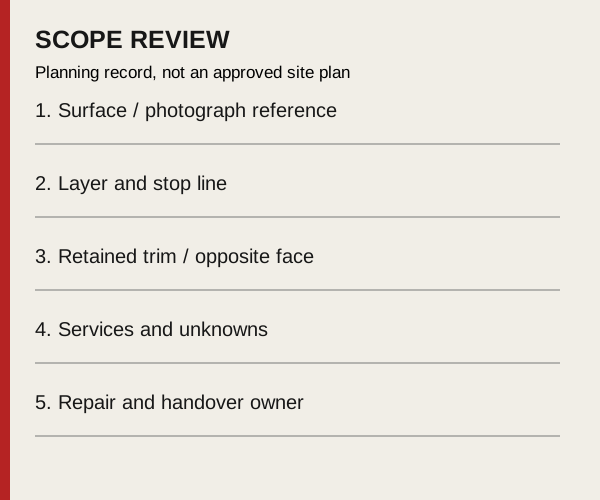
Use one entry per item or work area. Add the drawing or photograph reference, record unknowns explicitly and name the person who will resolve them. Keep the completed record with the agreed scope; the blank fields below are a discussion aid.
- Surface / photograph reference: ____________________
- Layer and stop line: ____________________
- Retained trim / opposite face: ____________________
- Services and unknowns: ____________________
- Repair and handover owner: ____________________
Bring the scope to a site review
Request an estimate with the location, the proposed removals and what must stay. Mention the unresolved items in this record so they can be discussed before the scope is agreed.