
Concrete Removal
How does broken concrete get out of a basement?
By CoreCut Demolition · Published September 28, 2026
- basement slabs
- rubble handling
- site access
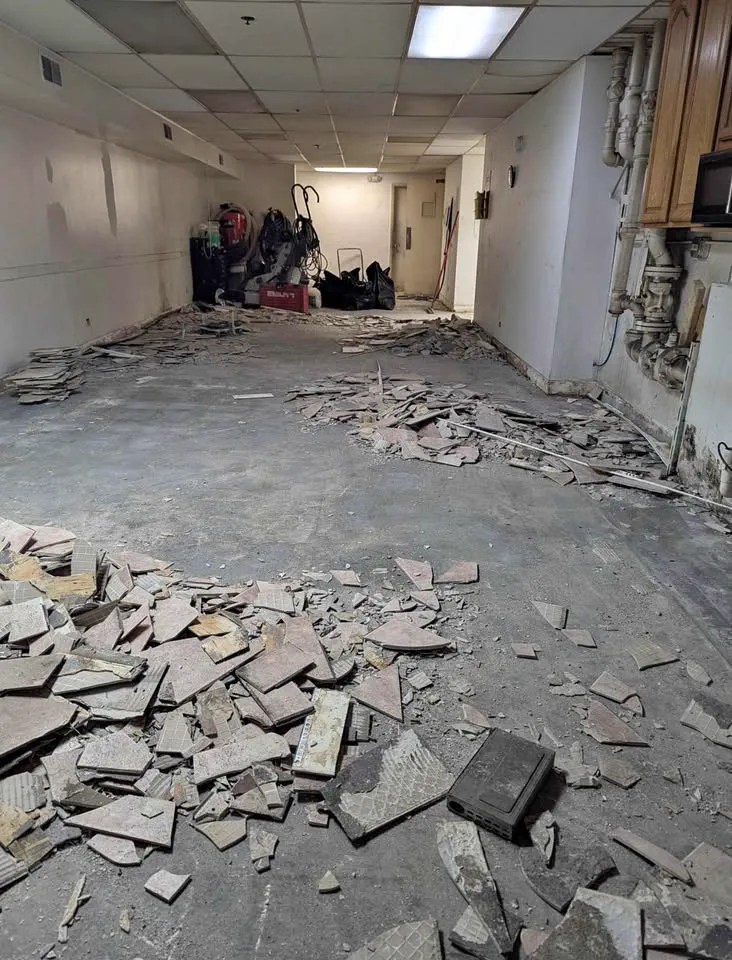
Broken basement concrete leaves in pieces sized for the route: carried or wheeled through the house, taken up walkout stairs, or moved through a suitable basement window with a chute or conveyor. The route is chosen at the site walk and determines the handling plan and the work involved, not just the way the slab is broken.
Every piece needs a safe journey from the floor to a loading point. A doorway that looks wide enough from above may have an awkward turn or stair landing below.
Size pieces for the actual exit
The slab may be cut into manageable sections before the remaining concrete is broken. Section size follows the narrowest point, the lifting arrangement and what workers can handle safely. Reinforcing mesh can hold fragments together, while a deeper or layered floor may produce heavier pieces than the surface suggests.
A plan based on the breaker alone can leave a pile too large to move. The crew checks doorway clearances, landings and changes in level before choosing a breakout method. A full wheelbarrow that moves easily on a flat floor can be unsuitable on stairs. If the route changes as work progresses, the piece size and handling method change with it.
Protect stairs, floors and living space
Where material goes through the house, protect floors, thresholds, corners and stair treads along the complete path. Coverings have to stay secure under repeated loads, not simply look neat before the first trip. Residents need a clear understanding of which rooms and passages will be affected.
Carry or contain fragments so sharp edges do not scrape finishes. Dust control starts at the work area, but cleaning also follows the path outside; an open stairwell can move dust into rooms far from the slab. Protect vents and close doors where appropriate. If the basement is occupied, separate the household's path from the crew's movements as far as the layout allows.
When a window can become the route
A basement window may provide a more direct exit if its opening and exterior space can accommodate a chute or conveyor safely. That decision depends on the window construction, the receiving area and whether the glass or frame can be protected or removed by the appropriate trade. A small window does not become a chute simply because the stairs are inconvenient.
Pieces still need controlled loading inside and containment outside. The route must not send debris onto a walkway or damage the foundation, well or landscaping. Assess who sets up and removes the handling equipment, where a person can work safely and what remains open to weather while material passes through.
Put the bin where the route ends
The bin or loading vehicle belongs at a practical receiving point, not merely in the nearest available parking space. Check the route across the lawn, driveway or path, as well as permission to place a container where proposed. If public space is involved, confirm the necessary arrangement with the City of Mississauga before placement.
Loading is separate from breaking. A team can free concrete quickly but still need careful, repeated trips to remove it; planning these as distinct tasks prevents rubble from blocking an exit or work area. Where the basement has a walkout, exterior stairs may reduce travel through finished rooms but still need protection against dropped fragments.
What CoreCut plans before the first cut
CoreCut Demolition Mississauga walks the slab and every possible exit for basement slab removal. We agree on sectioning, dust controls, floor protection and a loading point before concrete removal begins. If a window route is proposed, it is assessed rather than assumed to be available.
A precise breakup is only part of a complete scope. Request a site visit and show the proposed travel path, stairs, windows and bin location; that information lets the removal plan reflect the house people actually use.
Frequently asked questions
Can a conveyor carry concrete through a basement window?
It may be an option when the opening, exterior receiving area and handling equipment suit the site. The window frame, well and foundation must be protected, and material needs controlled loading at both ends. The crew should assess these conditions in person rather than assuming every basement window can serve as a debris opening.
Why not break the whole basement floor first?
A pile of loose concrete can block the work path and make dust and handling harder to manage. Sectioning and removing in a planned sequence keeps space available for workers and equipment. It also lets the crew respond if the exposed base, services or floor thickness differ from what was expected.
Will floor coverings keep dust out of the house?
Coverings protect against tracking and abrasion, but they are not a complete dust-control system. The cutting and breaking area needs containment, suitable collection and a controlled debris route. Stairwells and air movement can carry fine material beyond the basement, so doors, vents and the cleanup path must be considered together.
Who decides where the debris bin can stand?
The owner and removal crew review available loading positions at the site walk. They consider the route out of the basement, safe access, protection of paving and any permissions needed for the proposed placement. A convenient spot is not suitable if it obstructs residents or requires moving loads across an unprotected neighbour's property.
Primary planning references
Source links checked 6 October 2026. Confirm the requirements for your property and scope with the relevant authority and qualified professionals.