
Scope and Handover
What should a demolition notice tell neighbouring businesses?
- scope decisions
- project preparation
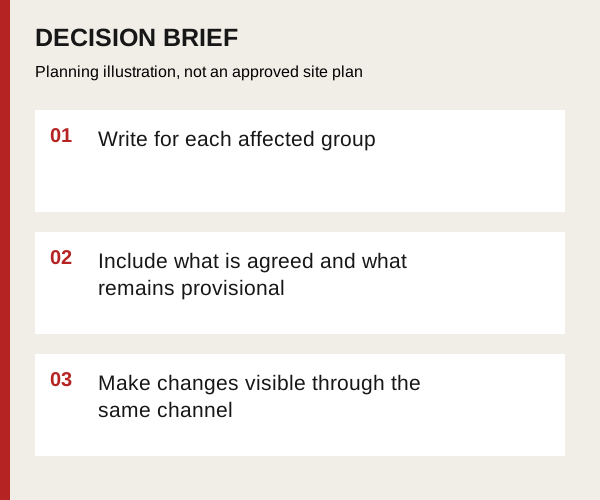
A useful notice tells people what changes for them and whom to contact. It does not need a technical demolition sequence, and it should not promise a quiet or disruption-free job.
Write for each affected group
Staff need to know which routes and rooms are unavailable. Neighbouring tenants need the expected disturbance window and a contact for conflicts. Deliveries need the loading arrangement. Customers may need a clear alternative entrance approved by the property manager. One vague notice saying “construction nearby” rarely answers all four tasks.
Have the building manager review the recipients and distribution method. Keep personal contact details limited to the agreed project contact. A notice should identify the work area without publishing alarm codes, access credentials or private occupant information.
Include what is agreed and what remains provisional
State the planned activity, affected area, approved working window, access changes and contact route. If a date depends on approvals or trade readiness, label it provisional. Calls answered around the clock do not mean noisy work is permitted at all hours.
A useful example is: “Removal in the west unit is planned for the confirmed building work window. The rear loading area will be reserved as shown on the manager's notice. Use the designated entrance and contact the project lead about a conflict.” Replace every location and arrangement with the approved site facts before circulation.
Make changes visible through the same channel
Identify who sends updates when a phase moves, a delivery changes or an access arrangement is revised. Remove superseded notices so occupants do not receive competing instructions. Keep a record of when the update was distributed and who must acknowledge it.
The office phase plan controls release of work areas; this notice supports the people around those areas. Neither a notice nor a tenant's acknowledgement replaces building approval, applicable work-hour rules or the site's safety arrangements.
Discuss this scope with CoreCut
For commercial strip-out, enquire with the occupancy constraints and identify the property-management contact who coordinates notices.