
Concrete Cutting
Can you core drill or cut a post-tensioned concrete slab?
By CoreCut Demolition · Published September 28, 2026
- post-tensioned slabs
- core drilling
- engineering
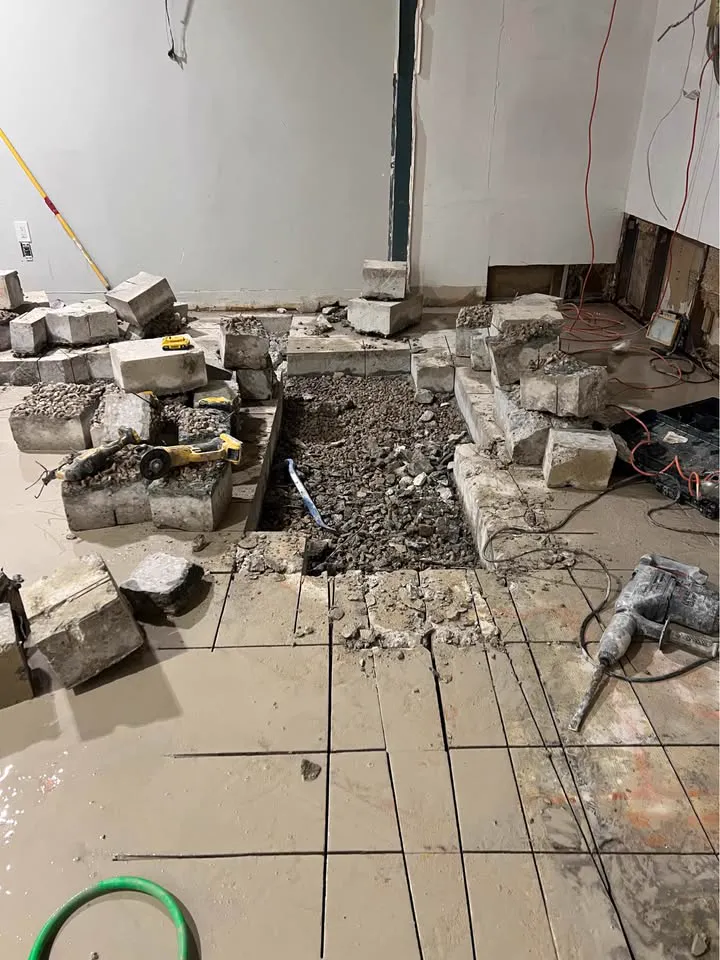
Yes, a post-tensioned slab can be cored or cut, but only after scanning and an engineer's review identify and mark the tendons. Cutting a live tendon can seriously injure workers and compromise the structure, so an unverified location is not a place to start.
The apparent simplicity of a round hole can hide a structural decision. The person planning the opening needs to know what carries the slab, not just where the pipe or conduit is meant to pass.
Where these slabs turn up
Post-tensioning is used to span space without relying on the same arrangement of beams as a conventional reinforced slab. In Mississauga, it can be present in condo towers, parking structures and newer commercial floors. Age or appearance alone does not reliably tell a crew what is inside.
Ask the building owner for structural drawings and as-built information early. A drawing can show the intended tendon layout, but later changes and field conditions still have to be checked at the precise cut location. A ceiling view from below can also reveal services that the floor plan does not describe.
Drawings, scanning and engineering
A qualified scanning specialist maps indications at the proposed location. The engineer compares those marks with the drawings, the intended load path and the opening size. Engineer review for slab drilling explains why permission to work in a room is not the same as approval to penetrate its floor.
The approved cut plan marks tendon paths, other embedded items and the permitted opening on the slab itself. Marks need to remain visible after floor coverings are lifted and equipment is positioned. The crew checks that the actual mark, orientation and size match the reviewed plan before putting a bit or saw to concrete.
A core is not the same as a large opening
A small core may fit between mapped tendons if the engineer accepts its position. A stair or mechanical opening changes much more of the slab and may require a different support and removal sequence. Neither can be justified by guessing that a gap on a drawing is clear.
If a scan is inconclusive, work at that location stops. The owner, scanner and engineer decide what further information is needed or whether the opening should move. An uncertain signal is not permission to probe with a drill or break into the slab to see what is there.
Why breaking is not a workaround
Hand breaking spreads impacts beyond the intended opening and gives little control around a stressed tendon. It can damage concrete around anchors or embedded services before the operator can see the problem. Choosing a quieter-looking hand tool does not remove the structural risk.
Sawing and coring offer controlled edges when they are used at engineer-approved locations. That control is only useful after the concealed conditions have been resolved. The work below the slab must also be protected against water, falling cores and debris.
What CoreCut needs before it cuts
CoreCut Demolition Mississauga requires the building's available structural information, a documented scan and an engineer-approved, marked cut location before working on a suspected post-tensioned slab. We coordinate access above and below, confirm how water and debris will be contained, and stop if site marks no longer agree with the approved plan.
See our core drilling service and broader concrete cutting work. To discuss a proposed opening, send the drawings and request a site visit rather than selecting a position by eye.
Frequently asked questions
Does a scan alone make a post-tensioned slab safe to drill?
No. The scan is evidence for the engineer to interpret alongside drawings and the planned opening. A scanner may identify tendon indications, but an engineer still needs to accept the location and any effect on the slab. The crew should have a clear approved mark, not an informal assurance that an area looks open.
Can the hole move if a tendon crosses the proposed spot?
Possibly, but the revised position needs the same review as the original. Moving a core a short distance may affect a pipe run, reinforcement or another concealed service. The designer and engineer should confirm the new position and update the on-slab marks before the cutter treats it as approved.
What if the original structural drawings cannot be found?
Missing drawings increase uncertainty; they do not turn the floor into an ordinary slab. The owner and engineer can determine what investigation is appropriate, which may include additional scanning or other checks. CoreCut does not cut a suspected post-tensioned slab simply because records are unavailable or an opening is urgent.
Why must the space below be checked for a small core?
A core passes through the slab and can release water, concrete and the core itself into an occupied area. Services attached to the underside may also be affected. Before drilling, access below lets the team protect people and finishes, verify the receiving point and plan how the core will be captured.
Primary planning references
Source links checked 6 October 2026. Confirm the requirements for your property and scope with the relevant authority and qualified professionals.